
Here’s a secret most visitors never learn: Lovina doesn’t officially exist. There’s no village called Lovina — the name, borrowed from a pioneering 1950s beach hotel, spread to cover seven fishing villages that grew together along the north coast: Pemaron, Tukadmungga, Anturan, Banyualit, Kalibukbuk, Kaliasem and Temukus. That origin explains the place. It’s not a resort town that was built; it’s a string of working villages that tourism gently found. While the south fights over beach club daybeds, this coast gets on with being Bali. We’ve run villas here for years — here’s what we actually send our guests to do.
1. See the Dolphins — Privately, and at the Right Time
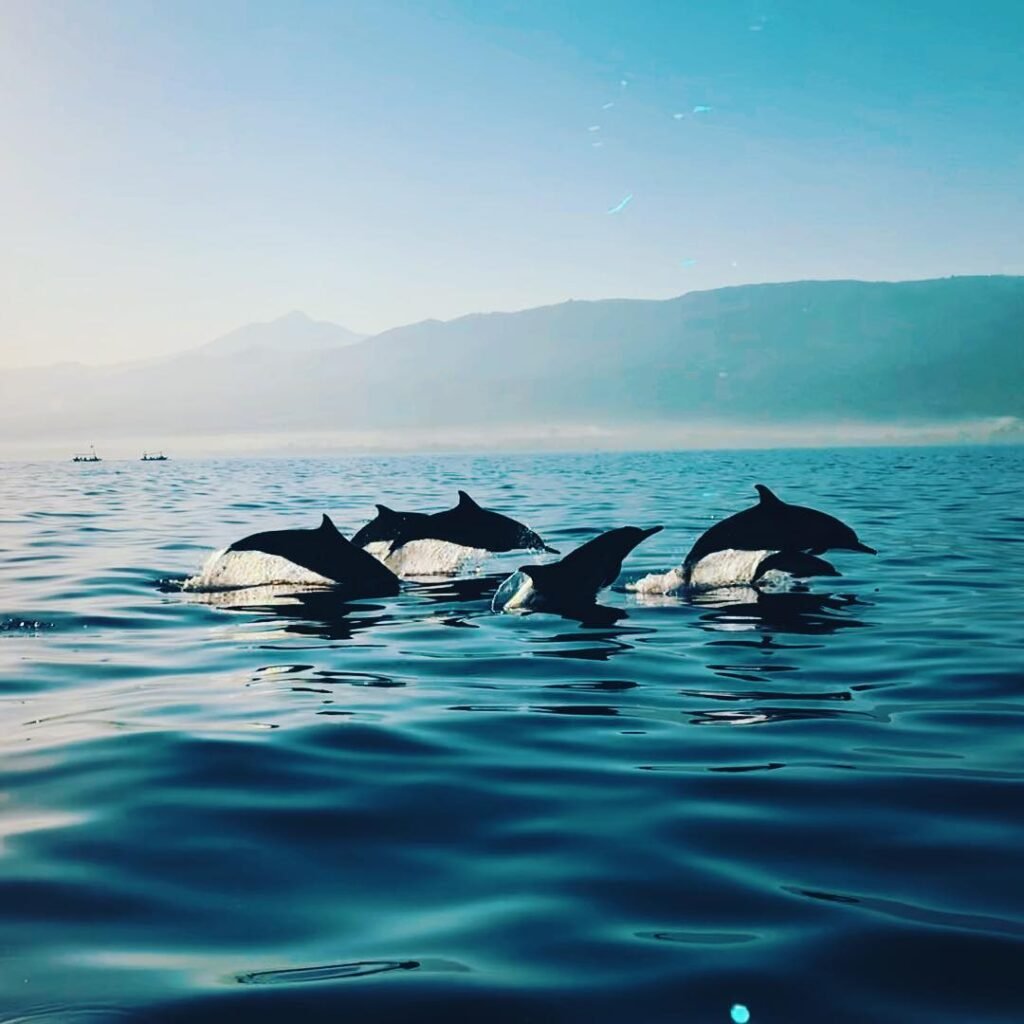
Lovina is famous for its resident dolphin pods, and the standard tour is famously chaotic: a dark drive to the public beach, price haggling, and a flotilla of boats leaving together at 6 AM. Two fixes.
First, go privately. If you stay on the beachfront in Temukus, a trusted local captain picks you up from the sand in front of your villa — no dark drive, no negotiating. Guests at Samastiti by the Beach step from their garden straight onto the boat.
Second — the local trick — don’t join the 6 AM rush. Leave at 7 AM instead, once the flotilla is heading back in, and you’ll often have the pods almost to yourselves. Sightings are just as good; the sea is just quieter. Either way, ask to combine the trip with snorkeling — masks and life jackets come along, and the reef is on the way home. You’re back for breakfast on your own terrace.
2. Chase the Waterfalls (Know the Ticket Tiers)
The hills behind Lovina hold Bali’s best waterfalls, and knowing how the ticketing works saves confusion at the gate.
Sekumpul — the showpiece, about an hour’s drive: seven falls dropping through a jungle amphitheater, reached by a 20-minute up-and-down walk past small warungs. Entry works in tiers: a small fee (around IDR 20,000) to view from above, a mid-tier trek (around IDR 150,000) with a local guide, swimming, and the Hidden waterfall, or the long trek (around IDR 250,000) adding Fiji waterfall, a fresh coconut and insurance. Bring proper shoes and swimwear; skip it in heavy rain season when the paths turn slippery.
Aling-Aling (Sambangan) — 30 minutes east, and really four waterfalls in one walk: Kroya, Pucuk, Kembar and Aling-Aling itself, the giant of the group. The basic walking ticket is small change; the guided option (around IDR 125,000) is the one people come for — cliff jumps and a natural slide down Kroya with a local guide. The wider area, nicknamed Sambangan Secret Garden, hides many more falls for serious trekkers.
Banyumala — the prettiest swim, 30–35 minutes up in Wanagiri village at about 1,200 meters, where the air turns properly cool. The path down is steep natural steps with handrails, through forest and fields of hydrangeas, ending at twin falls sliding down a mossy wall into a clear pool. Around IDR 50,000 in.
3. Soak at the Banjar Holy Hot Springs
Just 15 minutes from our villa in Temukus, warm volcanic water (a steady 37°C, lightly sulphurous — locals credit it for skin and joints) pours from the mouths of eight carved naga into the first of three tiered pools, the last fed by spouts three meters up that double as massage jets. Entry is modest (around IDR 40,000–45,000 for adults) and there’s a garden restaurant for afterwards. Honest expectations: the changing rooms are old and not the cleanest, so bring flip-flops and come prepared — the pools themselves are the reward. Two more local tips: go on a weekday (weekends belong to Balinese families and get lively), and don’t wear brand-new swimwear, as the mineral water can tint light fabric faintly orange.
4. Visit Bali’s Largest Buddhist Monastery
Brahmavihara-Arama sits in the hills just above the hot springs — they’re so close that the natural move is to do both in one outing, the monastery before or after your soak. It’s the largest Buddhist temple on Bali — built in 1969, Balinese in its architecture, Buddhist in every statue and detail, with views down over the Lovina coastline. A recent renovation left it beautiful: flower gardens, a heaven’s gate, and on the upper level a walk-up replica of Borobudur used for meditation. Sarongs are required and provided; entry is modest; the silence is the attraction.
5. Hike Munduk for the Vistas
Only 20 minutes from our villa, the Munduk area is North Bali’s walking country: ridgeline trails through clove and coffee plantations, mountain air, waterfalls tucked into the folds of the hills, and vistas that stack rice terraces, forest, and the sea into one view. Pick a trail, walk until the view stops you, and finish with lunch at a hillside warung with plantation coffee. It’s the easiest big-scenery hit on this coast, and most Lovina visitors never think to go up.
6. Snorkel the Recovering Reefs
The Bali Sea is calm, warm, and sheltered — no waves to fight — and the north coast’s reefs are actively being rebuilt: conservation projects have been placing reef structures on the seafloor along this coastline to bring the fish back, and it’s working. There’s snorkeling off Lovina itself, and serious healthy coral an hour east at Bukti, where our Villa Seaview has a thriving reef a few fin-kicks from its garden — a marine conservation area managed by the local fishermen themselves, which we proudly support. Divers can push on to Menjangan Island’s protected walls or the USS Liberty wreck at Tulamben.
7. Step Into Old Bali at Desa Sidetapa
Twenty-five minutes into the mountains, at around 900 meters, Sidetapa is a Bali Aga village — home to the “original Balinese,” whose communities predate the island’s Javanese-influenced majority culture. A local guide walks you through: the temple (viewed from outside), the ancient original houses, coffee or water offered along the way, and on clear days a view all the way down to the Bali Sea. It feels like a different century, and almost no tourists know it’s there. We have written a longer piece on the Bali Aga village of Sidetapa if you want the full picture before you go. This is the kind of trip our hosts love arranging.
8. Eat Where the Locals Eat
Skip the tourist strip and head for the warungs. Grilled fish caught that morning by the crews you can go out with yourself, nasi campur, fresh coconuts — meals rarely cost more than a coffee does in Seminyak. There’s even a cooking class in the area and a historic local coffee brand roasted in the hills if you want to take the flavors home. Our hosts keep a running list of the current best spots; every direct-booking guest gets our local guide with names and directions.
9. Do Absolutely Nothing (We’ll Bring the Massage to You)
This is the real answer. Lovina’s black volcanic sand holds the day’s warmth into the evening, sunsets go full pink-and-purple over the sea, and the loudest sound is usually a fishing boat coming in. And when doing nothing needs an upgrade: we send a trusted local masseuse to the villa. A massage in your own private villa, to the sound of the waves — or, if you like, out in the private bale right by the beach — is one of those experiences no spa appointment can match. A book, a calm sea, and someone working the knots out of your shoulders as the tide comes in. That’s the itinerary.
10. Grill S’mores at the Beach Firepit
The evening ritual at Samastiti by the Beach: as the sun drops, we light the firepit by the beach and out come the s’mores. Toasting marshmallows on black volcanic sand while the sky goes pink over the Bali Sea is the kind of simple, slightly absurd pleasure that kids talk about for the rest of the trip — and the adults never say no either. Sunset, fire, chocolate, sea. Some things need no itinerary entry, but this one earned it.
Where to Stay in Lovina
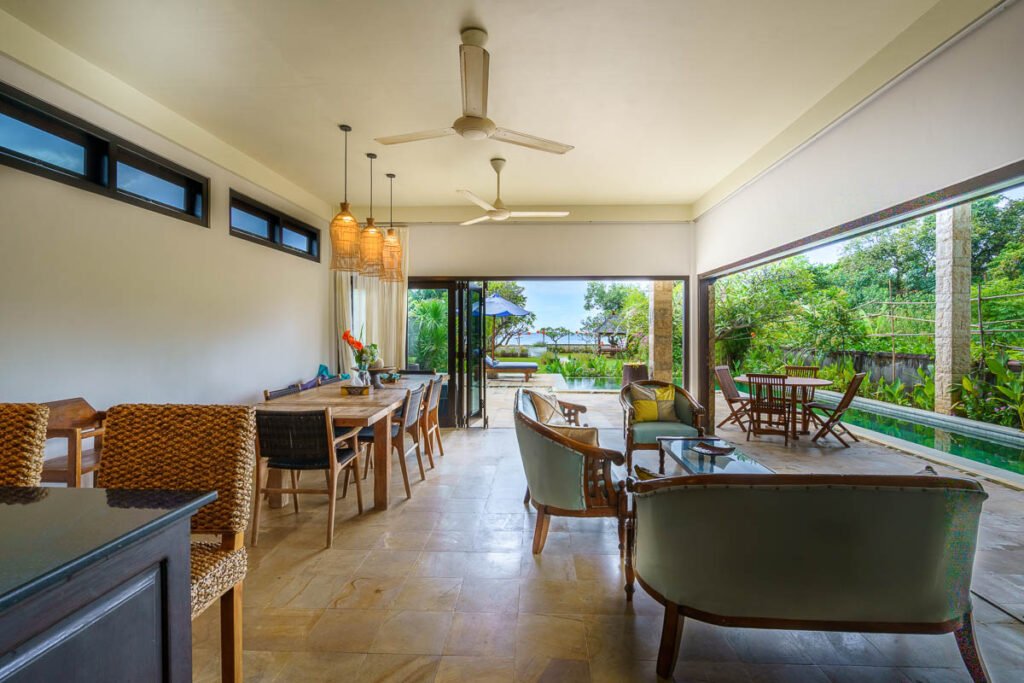
Remember those seven villages? The trick is choosing the right one. Kalibukbuk — the center, by the dolphin statue — has the restaurants and the crowds. Temukus, the quiet western end of the strip, is where our houses sit: on the beachfront, close enough to drive to dinner in minutes, far enough that you hear the sea instead of the strip. Samastiti by the Beach sleeps twelve across four bedrooms, while The Joglo by the Sea and The Nest are romantic hideaways for two — and if you are wondering what a joglo actually is, we have explained that too. Book all three together and you have a private beachfront compound for sixteen — one answer to the wider problem of finding a Bali villa for a group of fourteen to sixteen without splitting everyone up.
Booking direct on our website is always cheaper than the platforms — use code BOOKDIRECT10 for 10% off.
Frequently Asked Questions
- How many days do you need in Lovina?
- Three nights minimum — one for the dolphins, one for waterfalls and hot springs, one to do nothing. A week if you want the mountain day trips too.
- When is the best time to see dolphins in Lovina?
- The pods are resident, so year-round. Mornings are essential — but you don’t have to join the 6 AM rush; a private boat leaving at 7 AM often finds quieter water and the same dolphins.
- Is the sea safe for swimming in Lovina?
- Yes — unlike the south, the current here is calm and you can swim almost anywhere along the coast. It’s one of the north’s biggest underrated advantages for families. And when the kids have had enough salt: the pool at Samastiti by the Beach is partially shaded — one of the only covered pools in Bali — so they can play in the water all day without getting sunburned.
- Is Lovina worth visiting compared to South Bali?
- If you want nightlife and surf, stay south. If you want calm sea, waterfalls, hot springs, and villages where Bali still feels like itself, the north is the better half of the island.
- How far is Lovina from the airport?
- About 3 hours by car over the mountains. We arrange private transfers with trusted local drivers, with stops along the way — a crater-lake temple here, a waterfall or strawberry stall there — so the transfer becomes a journey of discovery in itself rather than a drive to endure.
3 Responses