
Quick answer: the best north Bali food is a trail rather than a restaurant list. It runs from Munduk’s coffee plantations to the historic Banyuatis roastery in Pemaron, a hillside winery in Desa Tajun, a one-table cooking class, warung fish straight off the jukung boats, and an ancestral kitchen in Les village — ending with s’mores at the Samastiti Villa Temukus beach firepit.
The south of Bali has restaurants with waiting lists. The north has something better: the entire supply chain within twenty minutes of Samastiti Villa Temukus. Coffee growing on the hillsides, a roastery that’s been at it for generations, fish coming off the boats in front of the house, and warungs cooking all of it the way it’s actually meant to taste. This north Bali food guide follows that chain from the top of the hill down to the water — where to go, what to order, and what to book before you arrive.
The Map: Where It All Is
The whole trail runs along one coast road with two detours into the hills. Orange pins are the eating and drinking; navy pins are the houses.
Eat & Drink
Munduk — coffee plantations, 20 min uphill
Banyuatis Coffee, Pemaron — the roastery
Lovina — warungs and the Meja Satu cooking class
Cantine Balita, Desa Tajun — winery and tasting
Dapur Bali Mula, Les — ancestral kitchen
Stay
Samastiti Villa Temukus — Temukus, west Lovina
The Nest — Lovina
The Joglo by the Sea — Lovina
Villa Seaview — Bukti, near Air Sanih
Coffee at the Source: Munduk’s Coffee Plantations
Twenty minutes uphill, the Munduk highlands are coffee country — plantations draped over the ridges alongside the clove trees that scent the whole area in harvest season. The move: a morning walk through the plantations, then Bali coffee at a hillside warung with the valley dropping away below your table, thick and sweet, with fried bananas. It is the honest place to start any north Bali food trail — you drink the crop where it grows, then follow it downhill.
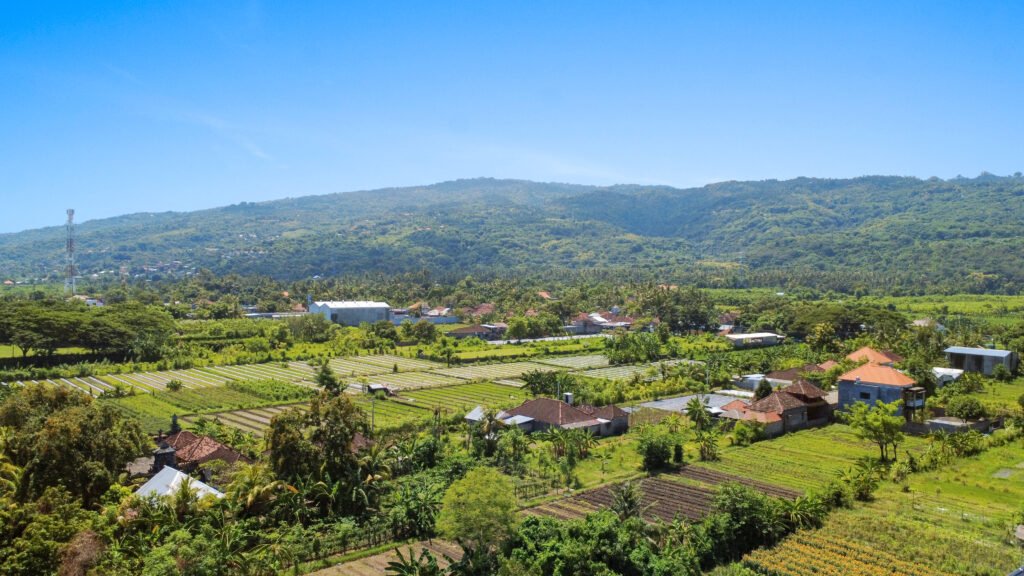
The drive up is half the point
From Lovina, head west and turn inland through the centre of Seririt — a properly busy local market street, worth slowing down for — then climb through a string of mountain villages: Ringdikit, Rangdu, Mayong, Gunungsari, Kayuputih. Every bend adds altitude and subtracts a degree, and there are no tour buses on this road.
Walk the ridgelines, eat afterwards
Munduk is North Bali’s walking country. Trails follow the ridges between valleys through working clove and coffee plantations — in clove season the whole hillside smells faintly of it, and you pass the harvest drying on tarpaulins beside the road. Routes run from gentle hour-long plantation loops to proper half-day treks, and the Twin Lakes viewpoint over Buyan and Tamblingan is the postcard moment. Lunch tastes considerably better afterwards.
The waterfalls in the folds
The Munduk hills hide their own falls, cooler and quieter than the coast-side circuit: Banyumala’s twin cascade and the four-fall garden valley of Banyu Wana Amertha are both up here at altitude. Fees, timings and pairings are in our North Bali waterfalls guide.
How to do the Munduk day
Munduk works as a generous day trip from the coast — up in the cool morning, hike, waterfall, plantation lunch, back for a swim in the sea by four. It is Day 4 of our seven-day North Bali itinerary for exactly that reason. Our hosts arrange drivers who know the viewpoints and the warungs; the mountain roads are emphatically not for tourist scooters.
The Roastery: Banyuatis Coffee, Pemaron
Down on the coast road in Pemaron, just east of Lovina, sits the factory where Banyuatis — one of Bali’s storied coffee names — is roasted and processed. It’s gloriously unpolished as attractions go: you’re welcomed with a coffee, shown through the working roastery, and finished in the factory’s own coffee shop to taste the range. The tour is short, real, and smells incredible. Bags of beans make the best souvenirs this coast produces.
Bali Wine, Grown in the Hills: Cantine Balita
The north also makes wine, which nobody expects. Cantine Balita — the winery behind the Isola label — grows Italian varieties in Balinese volcanic soil that behaves a lot like Sicily’s, and takes them from grape to bottle entirely on the island.
There are two halves to see: the winery itself up in the hills at Desa Tajun, and the vineyards down on the Singaraja coast, planted within 200 metres of the beach and trained the Balinese way, which looks nothing like a row of vines in Europe.
Tours are private and led by one of the winemakers, and the tasting at the end is included. Take the combo tour of both and pre-order lunch — they put out locally made Italian and French cheese at the winery. Reserve ahead; this isn’t a walk-in.
The One-Table Cooking Class
Balinese ceremonial dishes are so time- and ingredient-intensive that restaurants rarely attempt them — which is exactly what makes a cooking class here worthwhile. In the Lovina area, the Meja Satu class (“one table” — because that’s all there is) teaches the real repertoire in a small, unhurried setting with Balinese teachers: spice pastes ground from scratch, the dishes families cook for special days, and lunch being the exam you eat. Book ahead; one table fills fast.
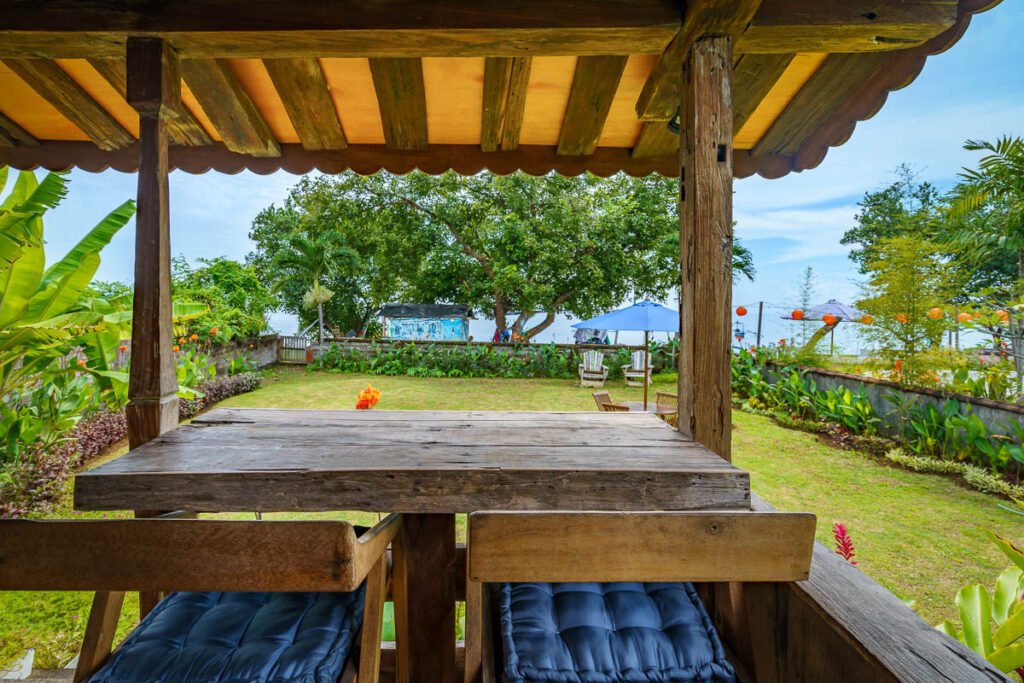
Warung Culture: The Best Meals Cost the Least
The rule of the north: eat where the plastic stools are. Nasi campur assembled from the day’s trays, fresh grilled fish, sambal made that morning, whole young coconuts — for less than a southern café charges for the coconut alone. Our hosts keep a live list of the current best warungs (they shift with the seasons and the cooks), and every direct-booking guest gets it with names and directions. If you do only one thing from this list, do this one: north Bali food at its best is a plastic stool, a plate of nasi campur, and a fish that was in the sea at dawn.
The Ancestral Kitchen: Dapur Bali Mula, Les Village
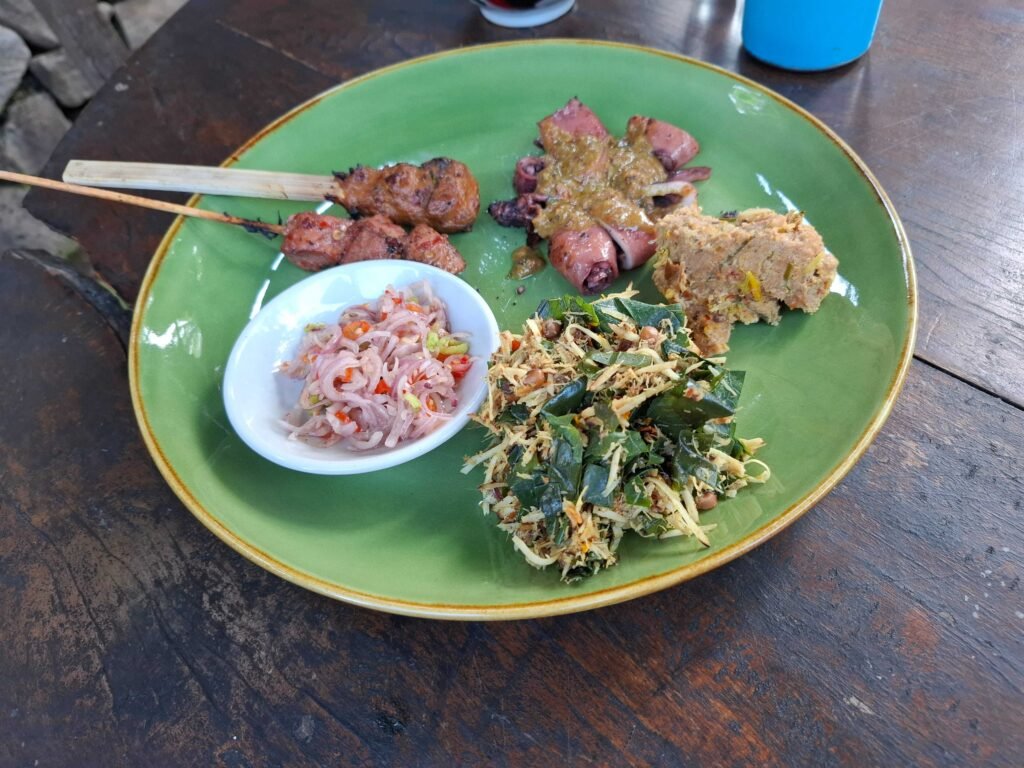
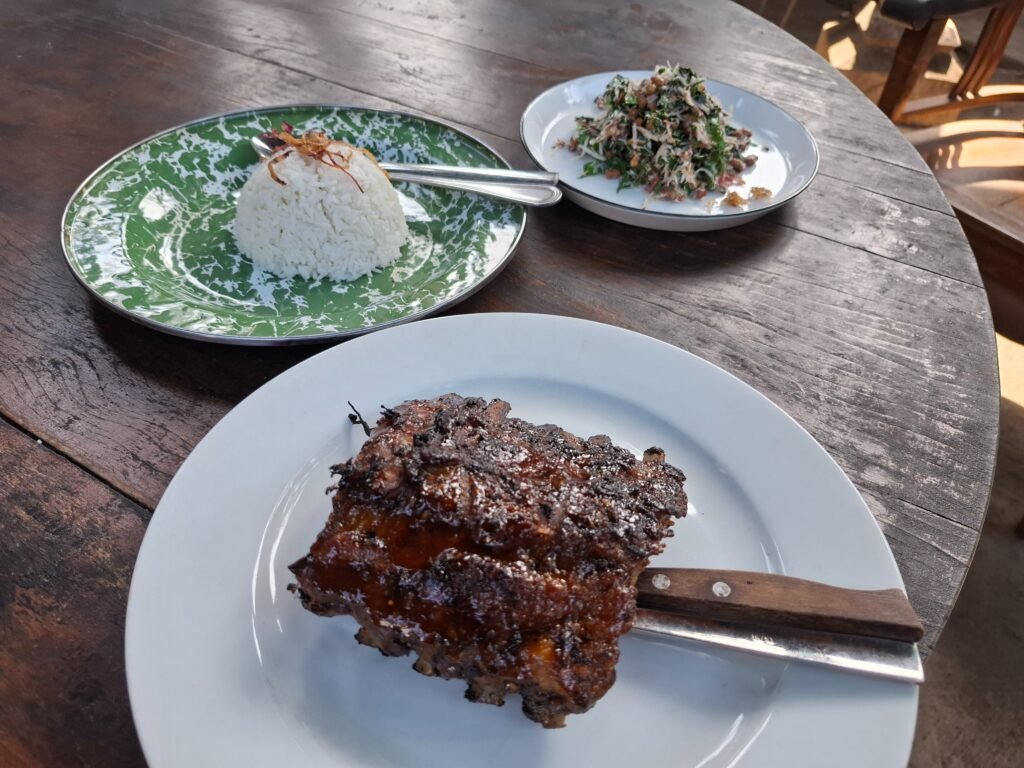
An hour or so east along the coast road, past Tejakula, the village of Les kept its own way of cooking — the same deep-rooted Bali Mula thread you can walk through at the Bali Aga village of Sidetapa — — and Dapur Bali Mula is where you eat it. Chef Jero Yudi has been running this kitchen since 2021, rebuilding Bali Kuno recipes from what the village actually has: the fishermen’s catch that morning, produce from the gardens, heritage spices, all of it over wood fire and none of it out of a factory packet.
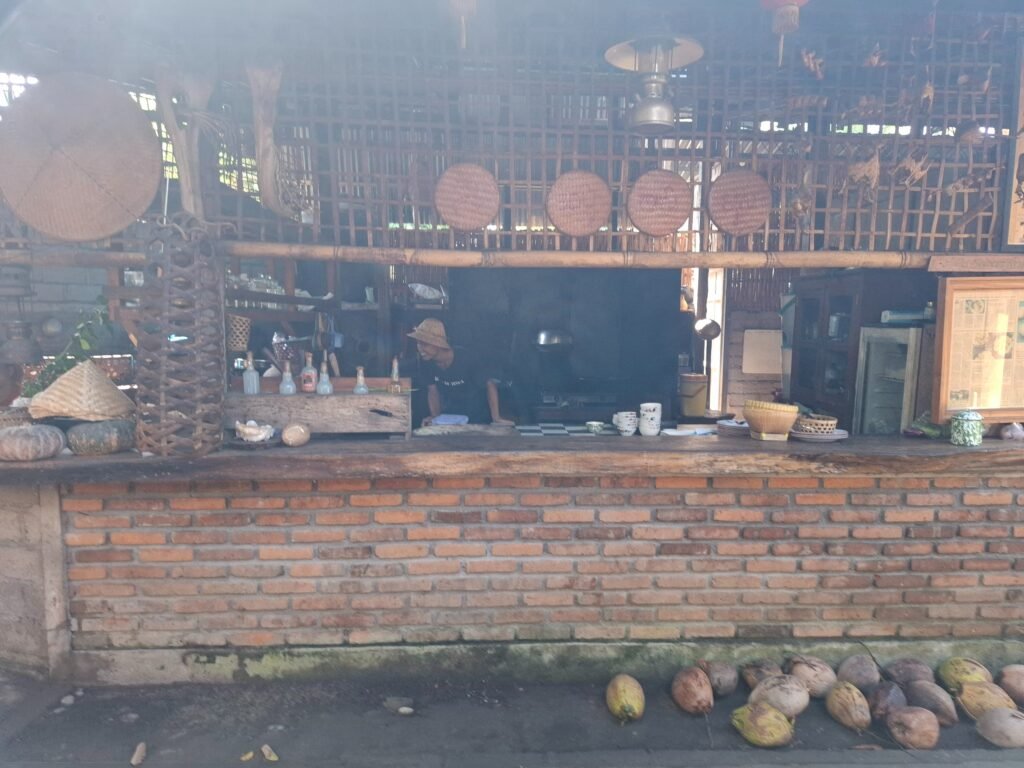
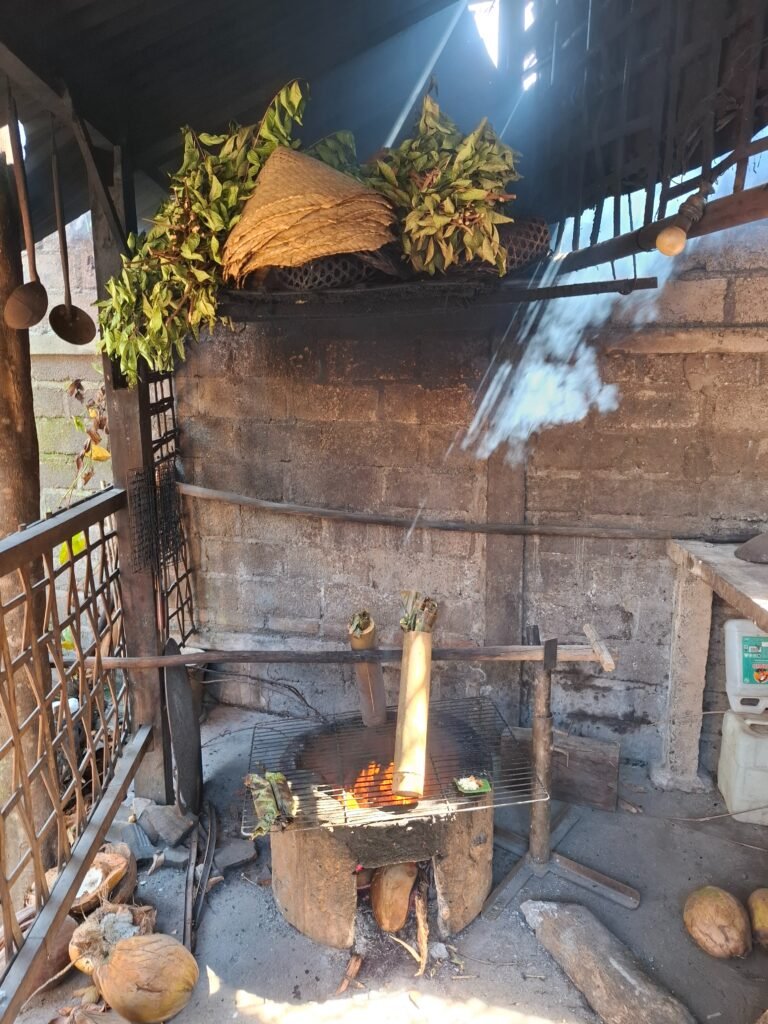
It is the most serious food on this entire trail. There is no fixed menu and no fixed hours — the kitchen follows the Balinese ritual calendar, so opening days shift with ceremony.
That’s the charm and the catch: message them on WhatsApp and confirm before you build a day around it. Reservation only.
The Shortest Supply Chain of All
Stay at Villa Seaview Bukti and dinner can start with you in the boat: a morning’s fishing with the village fishermen for tuna or mahi-mahi, and your catch grilled back at the house that evening. At Samastiti Villa Temukus, the host grills the morning’s catch from the boats out front, and the evening ends with s’mores over the beach firepit — the north’s least traditional dessert and the one every guest remembers. That is the whole north Bali food story in a single evening: nothing travelled far, and nobody had to book a table in Seminyak. Book direct with code BOOKDIRECT10.

How to Plan Your North Bali Food Trail
Everything above sits on one coast road with two turns inland, which makes north Bali food planning mostly a question of what you do with your mornings. Two days covers the whole trail without rushing.
Day one — the hills. Leave by eight, walk the Munduk plantations while it is still cool, drink coffee where it grows, then drop back down to Pemaron for the Banyuatis roastery in the afternoon. Home in time to swim.
Day two — the coast and the east. Cantine Balita in Desa Tajun for a mid-morning tour and tasting, then east along the coast to Les for a late lunch at Dapur Bali Mula. Warung stops wherever the fish looks freshest. Desa Tajun sits in the hills between the two, inland from the coast road near Air Sanih.
What to book, and when. Cantine Balita and Dapur Bali Mula are both reservation-only, and Dapur Bali Mula opens around the Balinese ritual calendar rather than fixed hours — message ahead before you build a day around it. Everything else you can simply walk into.
What it costs. This is the cheapest good eating in Bali: a warung meal is a couple of dollars, a plantation coffee less than that. The winery tour and the Les kitchen are the two things worth reserving properly and paying properly for — and they are still a fraction of a Seminyak tasting menu.
Getting around. Lovina up to Munduk is under an hour of climbing; Lovina east to Les is roughly fifty minutes along the coast. A driver for the day costs less than two taxi rides in the south and removes every parking, scooter and mountain-road problem at once.
Frequently Asked Questions
Can you visit a coffee plantation in North Bali?
Yes — the Munduk highlands twenty minutes above the coast are working coffee country, walkable and warung-dotted; no staged “luwak coffee” circus required.
Is there a good cooking class near Lovina?
The one-table Meja Satu class is the area’s notable one — tiny, authentic, and focused on the dishes restaurants don’t make. Reserve ahead.
What food is North Bali known for?
Fish straight off the jukung boats, proper warung nasi campur, highland coffee, and strawberries from the Bedugul villages on the mountain road.
Can the villas cook for us?
At the Lovina house our host grills and cooks the fresh catch; at Bingin and elsewhere the surrounding warungs and restaurants (many delivering) have it covered.
Can you do a wine tasting in North Bali?
Yes. Cantine Balita, the winery behind Isola wine, runs private winemaker-led tours of its Desa Tajun winery and its coastal vineyards near Singaraja, with a tasting included. Reserve ahead.
What is Dapur Bali Mula?
A reservation-only kitchen in Les village, Tejakula, cooking ancestral Bali Kuno recipes over wood fire from the day’s catch and village-grown produce. Opening days follow the Balinese ritual calendar, so confirm by WhatsApp before you travel.
Is Munduk worth visiting?
If you like walking, views, coffee or cool air, it is the best inland day in North Bali — and twenty minutes above the coast, it is almost negligent to skip.
How cold does it get in Munduk?
Pleasantly cool — highland-fresh days and genuinely crisp evenings by Bali standards. Bring a light layer; you will be glad of it at the Twin Lakes viewpoint.
When is clove season in North Bali?
Harvest generally runs in the dry-season months. If your timing is right you will see, and smell, the cloves drying along every village road on the way up to Munduk.
Is north Bali food different from the south?
Yes, and mostly in who it is cooked for. There is very little restaurant scene built around visitors here, so what you eat is what the village eats: fish landed that morning, warung nasi campur, highland coffee and the occasional ancestral kitchen. It is cheaper, plainer and considerably more interesting.
2 Responses