
Quick answer: A joglo is Java’s traditional aristocratic teak house — built nail-free around four main pillars under a soaring roof, which is why antique ones can be moved. The Joglo by the Sea is one such original, rebuilt in a beachfront garden in Temukus; it sleeps two.
Every guest asks the same question within an hour of arriving at our Joglo: what is this building? Fair question — nothing else on the coast looks like it. The short answer: a joglo is the traditional aristocratic house of Java, and this one made a long journey to end up in a beachfront garden in North Bali. The long answer is better.
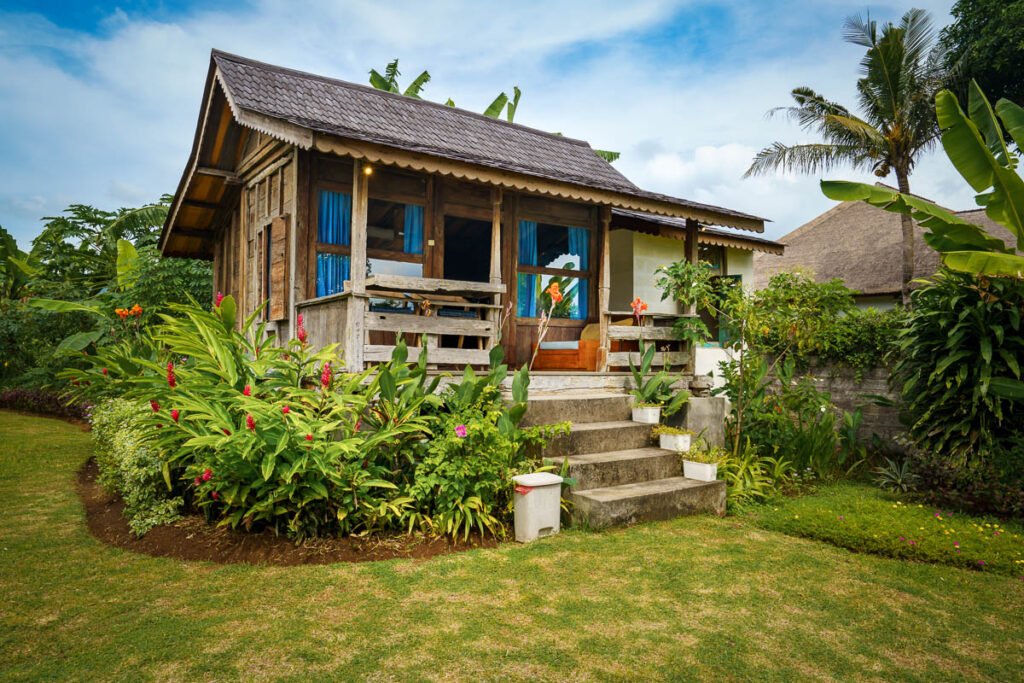
The House That Rank Built
In traditional Java, architecture announced status, and the joglo stood at the top of the hierarchy. Its signature is the roof: a steep, soaring central peak that seems to float above the walls, historically reserved for nobility and families of standing. The engineering is as elegant as the silhouette — the whole structure rests on four main teak pillars (the soko guru), which carry an intricately stacked ceiling structure that draws the eye, and the heat, upward. Stand inside one and look up: the layered timberwork above the pillars is the joglo’s cathedral moment.
Everything is teak, everything is joinery. Traditional joglos were built to be assembled — and, crucially, disassembled — without a nail in sight, which is why these houses can travel. Across Java and Bali, old joglos have been carefully taken apart beam by numbered beam, transported, and rebuilt, carrying a century of family history to a new address.
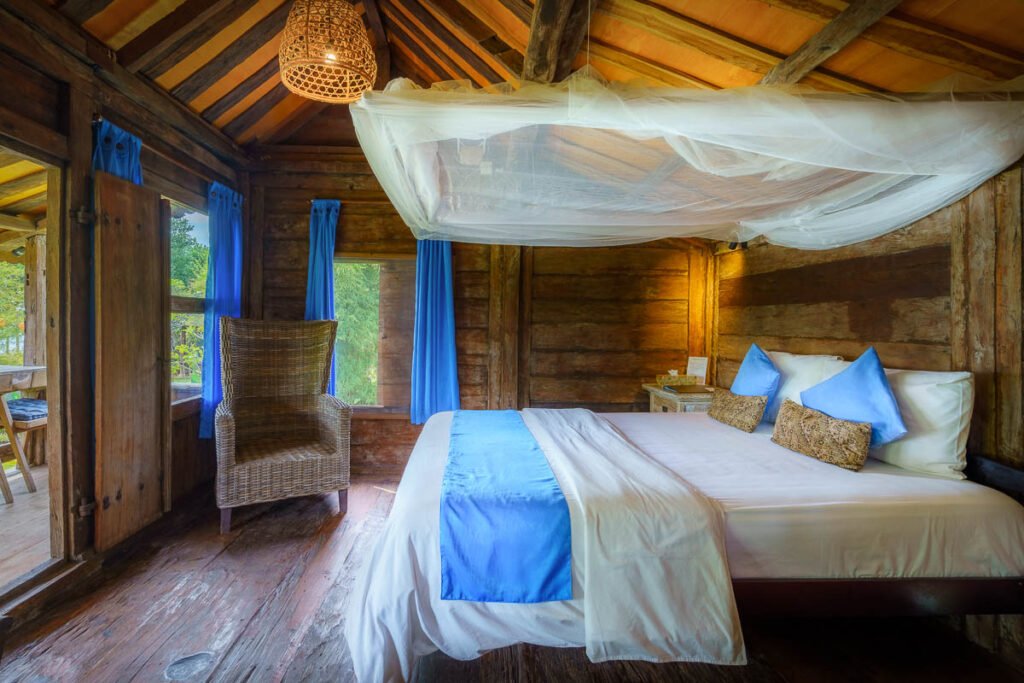
Ours Came to the Beach
The house came from Java. That is the honest extent of what we can document: the timber and the joinery are Javanese, and the structure was bought, taken apart beam by numbered beam, carried across the strait and raised again here. We have no paperwork naming the village it stood in, and we would rather say so than invent a lineage — old joglos changed hands quietly, and the family who first built it is long out of the story. What the teak says is plainer than any document: the worn edges of the pillars, the dark patina decades of hands leave behind, the hand-cut joints that still close true. This is a house that was made to be moved, and it has been.
The Joglo by the Sea is one of those travelers: a genuine antique Javanese joglo, dismantled, transported, and faithfully rebuilt in a 600 sqm garden in Temukus that opens straight onto Lovina‘s black-sand beachfront — no road, garden then sea.
Living in it is the point. The roof does what it was designed to do centuries before air-conditioning: heat rises into the peak and the living space below stays shaded and airy. Carved pillars and warm old teak surround you; the sea provides the soundtrack. It sleeps two, deliberately — a heritage house at this scale is a couple’s house, and it has quietly become one of our most-loved honeymoon stays (it anchors our romantic North Bali guide).
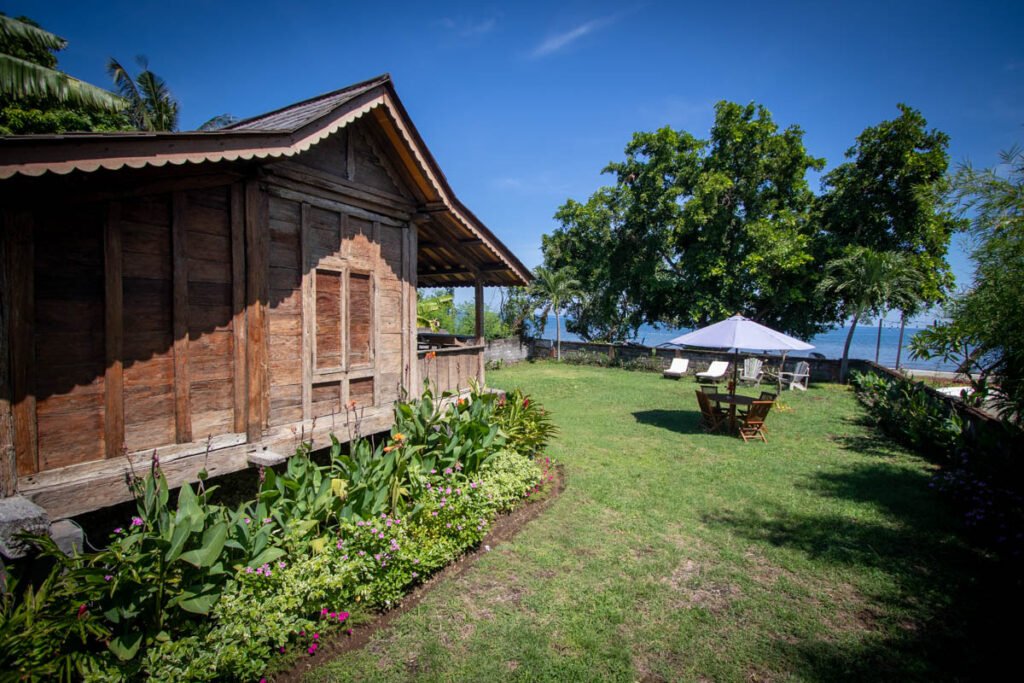
Old House, Honest Comforts
Heritage doesn’t mean hardship. The Joglo pairs its antique bones with the things modern guests actually need — a proper bathroom, a comfortable bed, wifi, and the same host care as every Samastiti house. What it doesn’t have is anything generic: no two joglos are alike, because each carries its own carvings, repairs, and history in the timber. You are not staying in a room type. You are staying in a specific, singular old house.
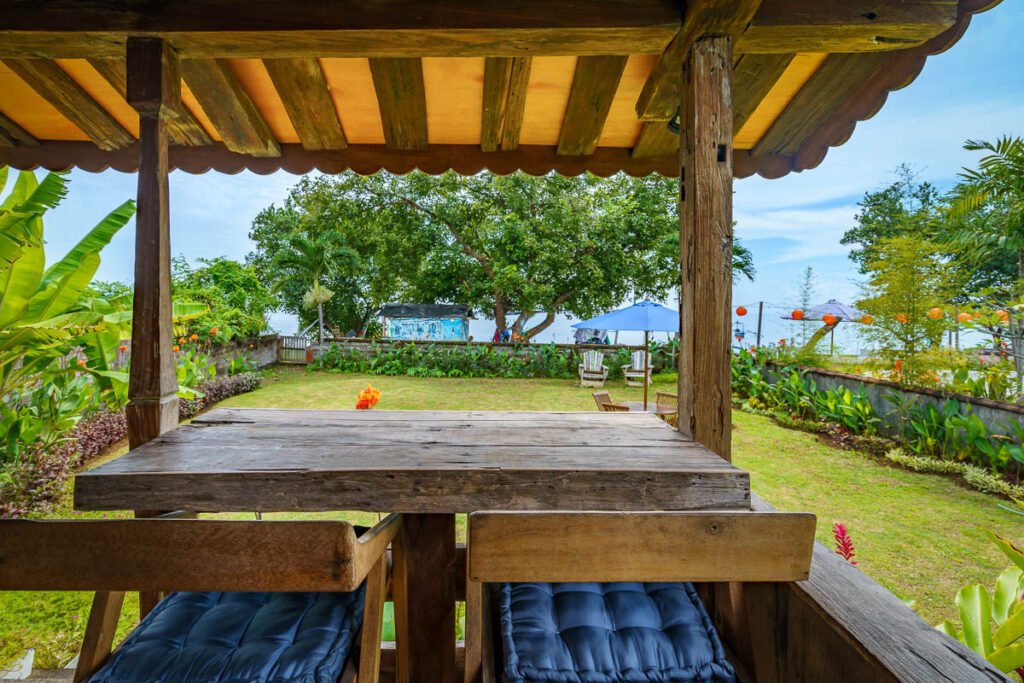
Joglo, Nest, or Beach House?
Three ways to do the same quiet Temukus beachfront: the Joglo for heritage romance at garden level; The Nest Temukus for the modern architectural counterpoint, up on stilts above the trees; and Samastiti Villa Temukus when it’s the whole family coming. Book any of them direct with code BOOKDIRECT10 — always the best price, and with houses this individual, you’ll want to talk to the people who actually keep them.
Frequently Asked Questions
What does “joglo” mean?
It names both the house form and its signature steep central roof — the traditional high-status dwelling of Java, built in teak around four main pillars.
Are joglo houses really moved from Java to Bali?
Yes — traditional joglo joinery was designed for assembly without nails, so old houses can be dismantled beam by beam and rebuilt elsewhere. Ours made exactly that journey.
Is a joglo comfortable to sleep in?
Very — the roof was tropical climate control before electricity, keeping the space below airy and shaded, and ours adds modern comforts without touching the character.
Can families stay at the Joglo by the Sea?
It’s designed for two — couples and honeymooners. Families fit perfectly next door at Samastiti Villa Temukus, on the same beachfront.